
24/7 Emergency Line Open
Water heater repair
Water Heater Not Working? Repairs for Cheltenham Homes
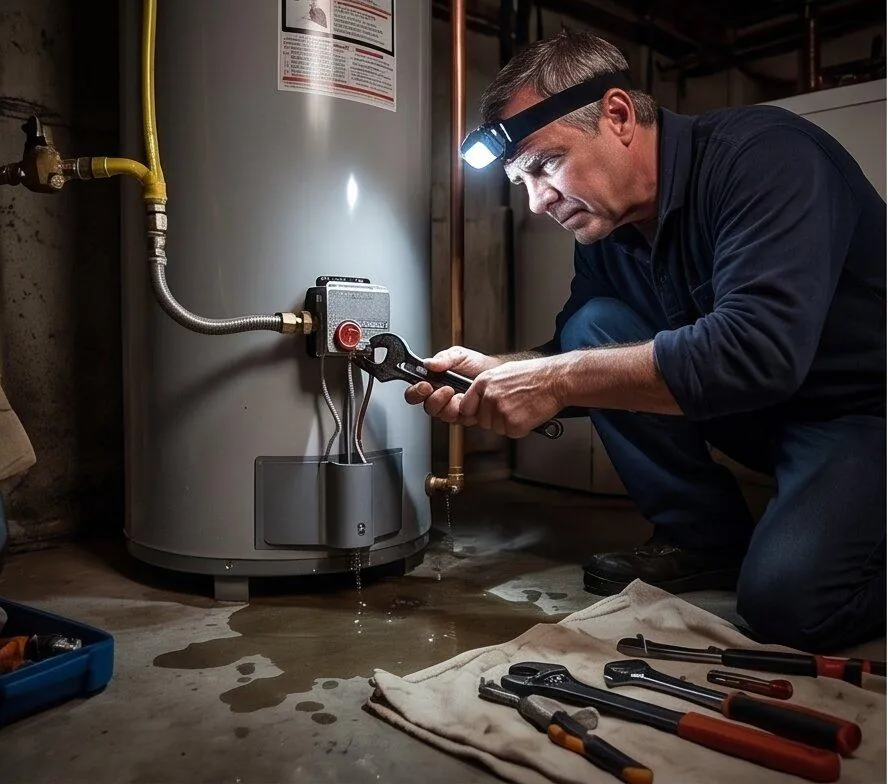
A cold shower, a puddle around the tank or a pilot flame that will not stay lit are the usual reasons people call about a water heater. The first job is working out whether the unit can be repaired or has reached the end of its life.
The plumber tests the parts that commonly fail, tells you what each repair involves, and says plainly when a new heater makes more sense than another repair.
- Licensed and insured plumbers
- Same-day service when available
- 24/7 emergency dispatch
No hot water or not enough: what to check first
Start with the simple causes before assuming the heater has failed. A tripped breaker, a switched-off gas valve or a thermostat nudged to a low setting can all leave a house cold, and each takes a minute to rule out. If the unit is gas, look through the small window or listen at the burner for the flame. If it is electric, check the breaker panel for a tripped double-pole breaker.
- Confirm the gas valve or breaker feeding the heater is on, and that other gas appliances still work.
- Look at the temperature dial or setting, because a vacation setting or a bumped dial is common.
- Press the reset button on an electric heater once, after switching power off. Do not keep pressing it if it trips again.
- Note whether the water is lukewarm or completely cold, and whether it runs out fast, since those clues point to different parts.
Lukewarm water that fades quickly often means a failed lower element on an electric unit or a tank full of sediment. Completely cold water points to a lost flame, a dead thermostat or a lost power supply. Write down what you see and tell the plumber when you call.
Gas or electric: what fails in each type of heater
The two fuel types fail in different places, so the repair list depends on which one you have. A gas heater has a burner, a pilot or igniter, a thermocouple or flame sensor, a gas control valve and a vent. An electric heater has two heating elements, two thermostats, a high-limit switch and the wiring that feeds them. Both share the tank, the anode rod, the drain valve and the temperature and pressure relief valve.
| Part | Gas heater | Electric heater |
|---|---|---|
| Heat source | Burner and pilot or electronic igniter | Upper and lower heating elements |
| Common no-heat fault | Dirty or failed thermocouple or flame sensor; igniter that will not spark | Burned-out element or a failed thermostat |
| Safety limit | Flame sensor and draft or vent safety | High-limit reset switch |
| Sign of wear | Yellow or lazy flame, soot at the top of the tank | Breaker that trips, water that is warm but never hot |
| Typical repair | Clean or replace the sensor, igniter or gas control | Replace an element or thermostat |
A pilot that will not stay lit, a burner that cycles on and off, or a smell of exhaust near the heater should be handled by a plumber and not by a homeowner with a lighter. If you ever smell gas, leave the house first and follow the steps on the gas line repair page.
Cold water this morning?
Call dispatch with the fuel type, the age of the heater and what the water is doing. The plumber can usually tell from your description whether this is a quick part or a bigger repair.
A leaking tank: repair, or time to replace?
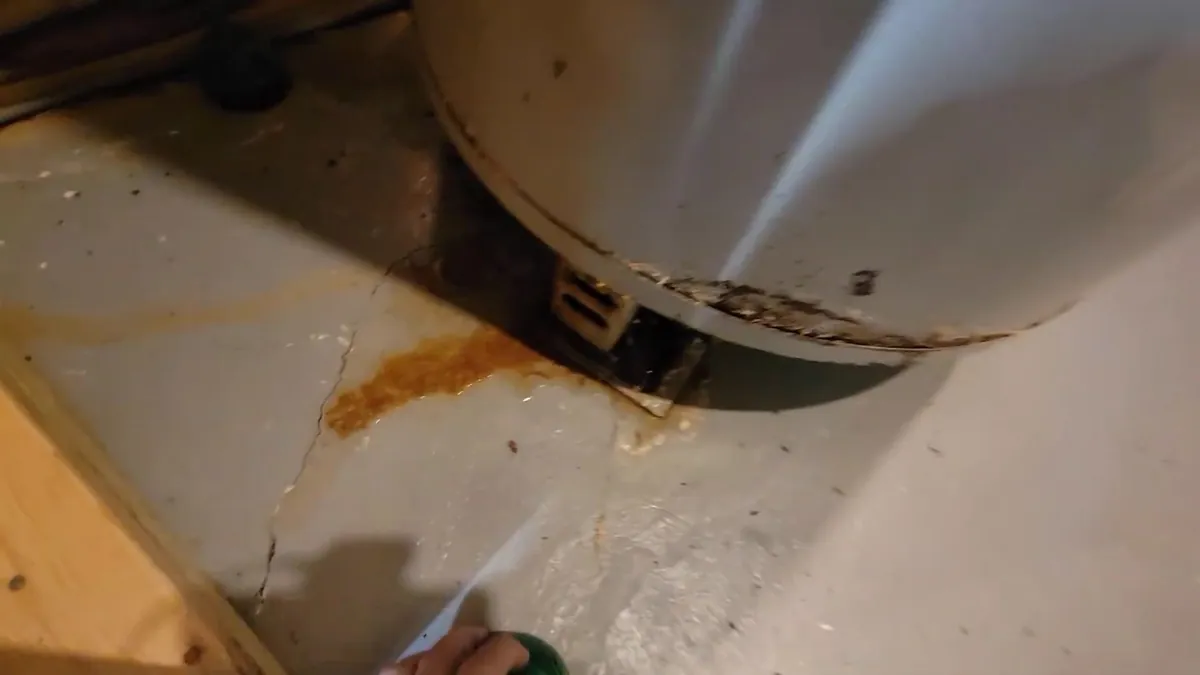
Where the water comes from decides everything. A drip at the relief valve, the drain valve or a supply fitting can be repaired in place, and the repair is usually inexpensive. Water that seeps from the bottom of the tank or from under the jacket is different, because it means the steel tank has corroded through, and no repair will close that.
Turn off the cold water supply to the heater and switch off the gas or power if the leak is steady, then place a pan or towels to catch the water. A heater that has been dripping for weeks can soak the floor, and the drying and cleanup page explains what happens next if water has reached walls or flooring. Photograph the leak before the plumber arrives so the source is clear.
Sediment, flushing and hard water in Cheltenham
Minerals settle at the bottom of a tank over time, and a layer of sediment insulates the water from the burner or lower element. The result is rumbling or popping noises as water boils under the scale, longer heating times and, eventually, a tank that overheats and fails. Draining a few gallons from the valve at the bottom, or a full flush, clears much of it while it is still loose.
How hard is the water here?
One public listing puts Cheltenham Village at 153 mg/L, roughly 8.9 grains per gallon, in the hard range. Use it as a pointer and not a lab result, since your utility report or a test strip shows what actually reaches your tap. Scale forms faster in harder water, so flushing the tank once a year is a sensible habit at any age.
Source: TapWaterData Pennsylvania table, read November 2026.
Noise is the symptom people notice first. Rumbling on every heating cycle usually means sediment, a high-pitched whine can come from a partly closed valve or from scale on an element, and a ticking sound as the tank heats up is often just metal expanding. A plumber can tell the harmless ones from the worrying ones by listening at the tank.
Not sure if it is worth fixing?
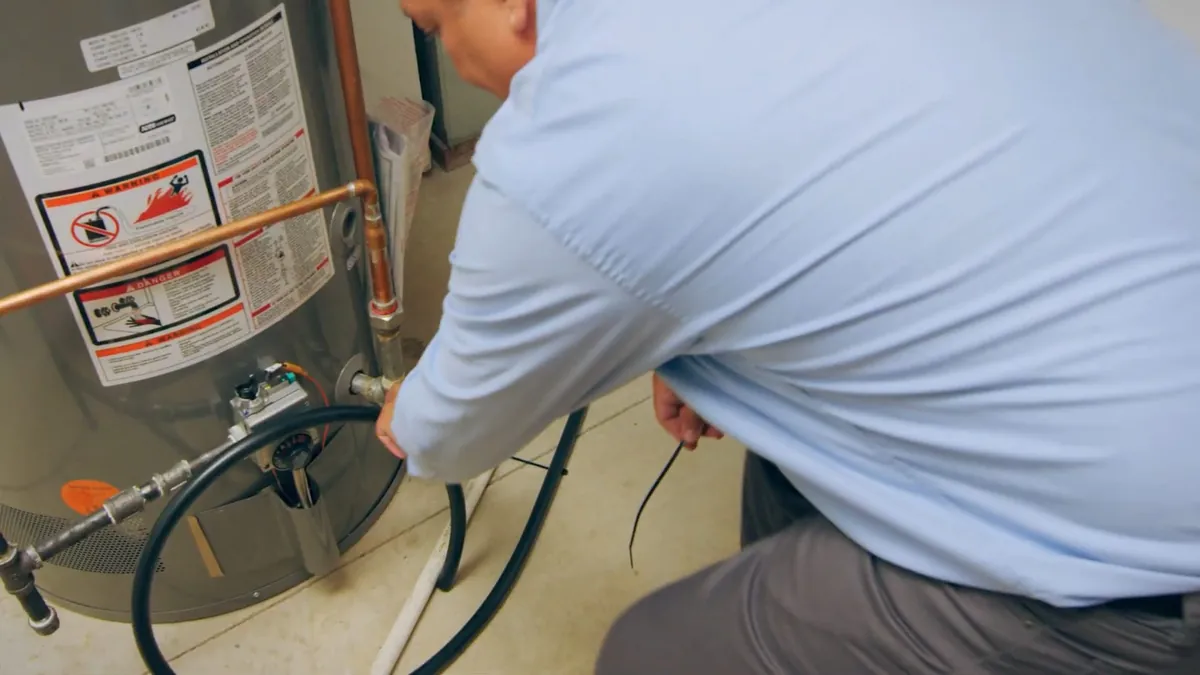
Ask the plumber for the repair option and the replacement option side by side, with the heater age and condition in mind.
Boiler, expansion tank and service questions
Some Cheltenham homes heat with a boiler, and the same plumbers who service tank heaters handle the domestic hot water side of that system, including indirect tanks and the controls that tie them together. A boiler that supplies radiators is a heating system, so a heating specialist handles the loop itself, while the plumber covers the water heater, the supply and drain piping and the safety valves.
The expansion tank is a small tank on the cold supply near the heater. It absorbs the extra volume of water as it heats, which protects the tank and the pipes from pressure spikes. If your relief valve keeps dripping, the expansion tank may have lost its air charge. Service for any of these parts follows the same sequence: check pressure, test the safety devices, flush the tank and report what is worn. If the result is a replacement, the heater replacement options cover sizing, fuel choices and what the job includes.
Safety: a heater that leaks gas, smells of exhaust, shows scorch marks or has a relief valve discharging hot water is a hazard. Shut off the gas or power, keep people away from the area and call at once.
Water heater repair questions answered
How do I tell whether my water heater is leaking from the tank or a fitting?
Dry the heater with a towel, then watch for where fresh water appears. Water beading at a pipe connection, the relief valve or the drain valve is a fitting leak, and it can often be fixed. Water coming from the bottom edge or from under the insulation points to a tank that has rusted through. That is not repairable, so shut off the supply and plan a replacement.
Can a water heater be repaired without replacing the whole tank?
Often yes. Heating elements, thermostats, thermocouples, igniters, gas controls and relief valves are all replaceable parts. The question is whether the tank itself is sound. A heater around ten years old with a rusted base or repeated repairs is a poor candidate, while a younger unit with a single failed part usually is not.
How do I relight a pilot light, and when should I call a plumber?
Check the manufacturer's label on the heater, which gives the exact steps for your model. In general the sequence is: set the control to pilot, hold the button while lighting the flame, wait about a minute, then release. If the flame will not stay lit after two tries, or you smell gas at any point, stop and call. Repeated outages mean a failing thermocouple or a venting problem.
How long should a hot water tank last with hard water?
Plan on roughly eight to twelve years for a standard tank, with the low end more likely where water is hard and the heater has never been flushed. Scale shortens life by overheating the tank bottom. Flushing yearly and having the anode rod checked can add years, but a tank that leaks from its body has reached the end regardless of age.
When should I call right away for no hot water?
Do now: check the breaker or gas valve, and call if you smell gas, see water pooling, or find the unit hot to the touch with no flame. Can wait: a heater that is slow but working, or a single noisy cycle. If the heater is the only source of hot water in a home with children or elderly residents, treat the outage as urgent and call the same day.
Hot water back, and a clear answer on the tank
Call dispatch and describe the heater, its fuel and what it is doing. The plumber will test the likely parts and tell you whether to repair or replace.
- Licensed and insured plumbers
- Same-day service when available
- 24/7 emergency dispatch