
24/7 Emergency Line Open
Tankless water heater service
Tankless Water Heaters: Installation, Descaling and Repairs
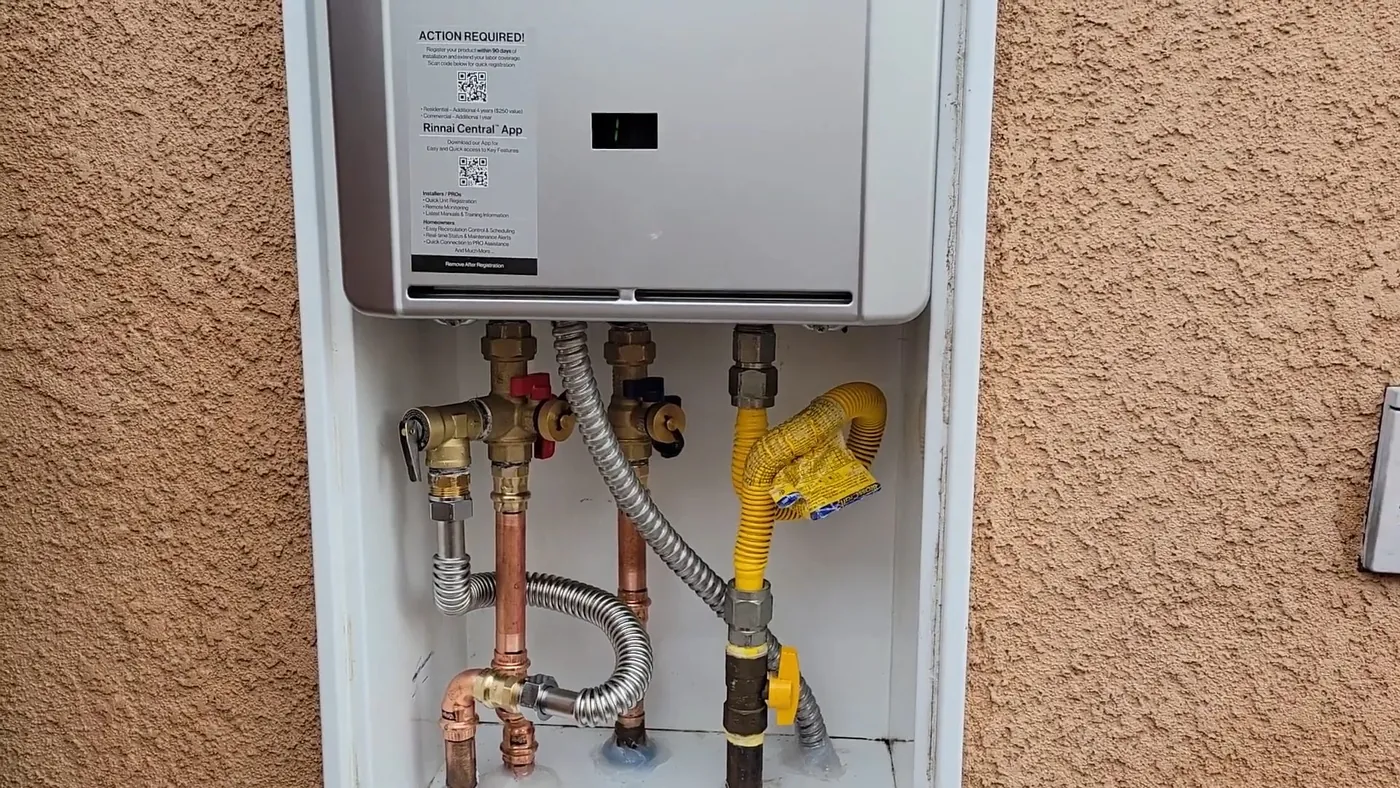
A tankless heater warms water only when a tap is open, so it never runs out and it takes up little space. It also has parts a tank does not: a heat exchanger, flow sensors, a control board and a vent, and each can need attention.
The plumber installs new units, converts tank homes to tankless, descales units that have lost output and diagnoses error codes. Here is what each of those jobs looks like.
- Licensed and insured plumbers
- Same-day service when available
- 24/7 emergency dispatch
Tankless installation and tank conversion
A tankless unit is not a drop-in swap for a tank. A gas model draws a large burst of fuel, so the gas line and the meter capacity have to support it, and the vent is a sealed plastic or metal pipe that goes through a wall or the roof. An electric model needs a heavy circuit, often more than the old tank used. The plumber checks all of it before quoting.
Gas-side work stops at the appliance. The gas utility, PECO, leaves everything past the meter to the customer or the contractor they hire, according to its service application (form as filed with a neighboring township), so the line to the heater has to be sized and tested as part of the job. The gas pipe sizing and testing page explains how that is done.
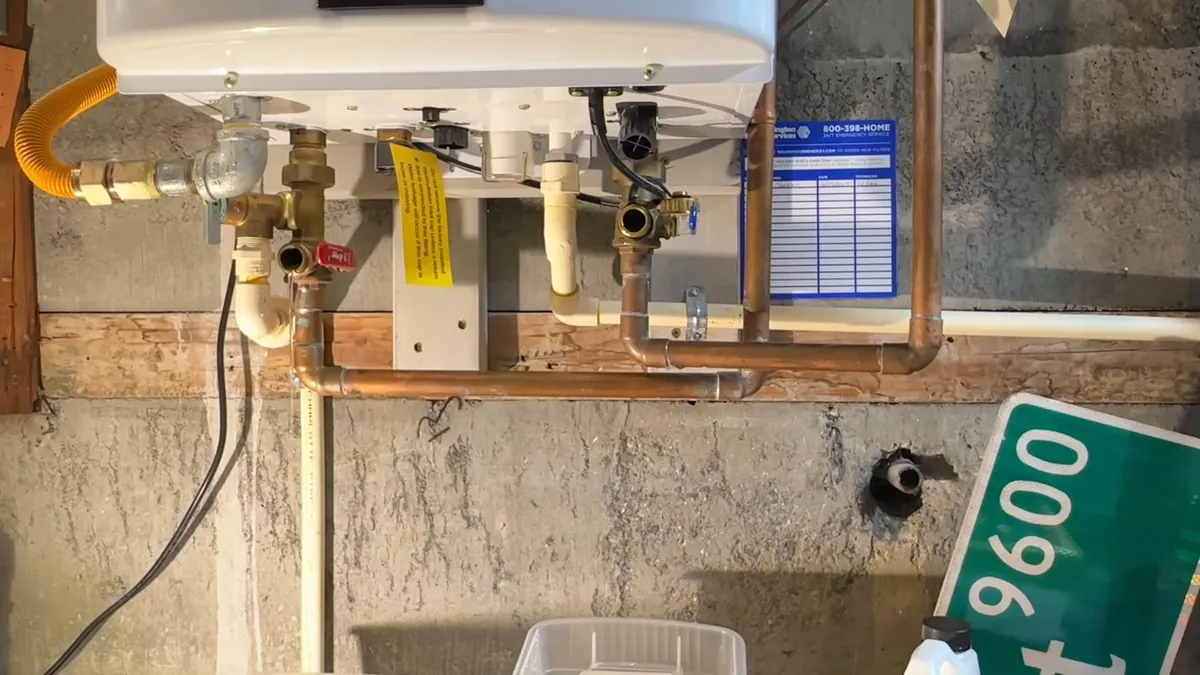
Descaling and flushing a tankless heater
Scale is the most common reason a tankless unit loses output. Minerals build up inside the heat exchanger, narrow the passages and make the unit overheat, which triggers error codes or a trickle of lukewarm water. The remedy is a descaling flush: the plumber isolates the unit with its service valves, circulates a mild acid solution through it and rinses it clean.
Why local water matters
Published hardness data for Cheltenham Village runs near 8.9 grains per gallon, which counts as hard. Treat that number as a rough guide and read your own utility report, but if your tap water is similar, a yearly descaling flush is a sensible schedule for a unit with narrow internal passages.
Source: Pennsylvania hardness listing, read November 2026.
Units with no isolation valves should have them added during the next visit, because flushing is difficult without them. A softener upstream greatly slows scale, and the softener and filter options page covers it.
Tankless unit throwing an error code?
Call dispatch with the model name and the code on the display. The plumber can often tell from those two details what the likely cause is.
Repair and troubleshooting: when the hot water stops
Tankless heaters usually report a problem with a code, and the code narrows the search. Common causes are a blocked vent or air intake, a failed flame sensor or igniter on gas models, a flow sensor that has collected scale, or a mineral-clogged heat exchanger. Water that fluctuates between hot and cold at low flow is often a sensor or a minimum-flow issue, and not a failure of the whole unit.
| Symptom | Likely cause | Typical response |
|---|---|---|
| Error code and no heat | Vent blockage, sensor or igniter fault | Clear the vent, clean or replace the part |
| Hot, then cold, then hot | Scale, flow sensor or a cross-connection in the plumbing | Descale, test flow, check the supply lines |
| Low hot-water volume | Clogged heat exchanger or low gas supply | Flush, then check gas pressure |
| Unit will not start | No power, closed gas valve or tripped safety | Restore the supply and reset once |
A unit that keeps tripping the same code after one reset needs a service call, not another reset. Repeated faults can be the first sign of a failing control board or heat exchanger, which is a harder repair than a cleaning.
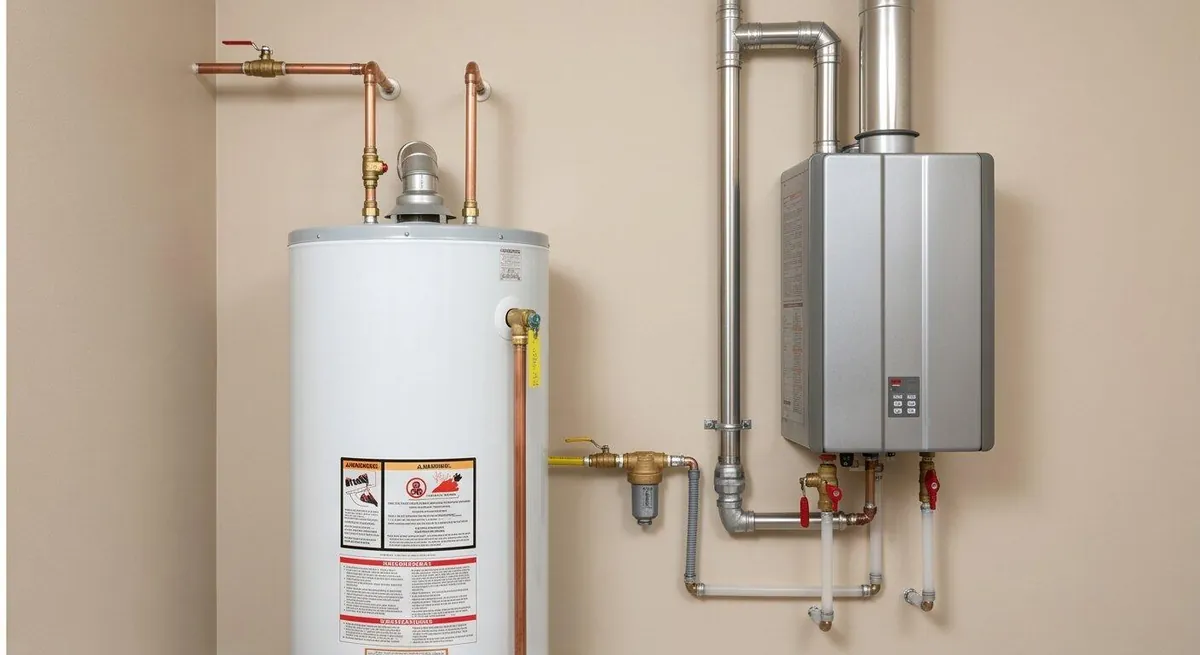
Tankless or tank: which one fits your house?
A tankless heater makes sense for a household that wants endless hot water, has wall space for it and plans to stay for years. A tank still wins where gas capacity is limited, where the home draws from many taps at once or where the budget favors the lower up-front cost. Larger households may need two units or a bigger model to cover simultaneous showers.
Fuel matters too. Gas units give high output but need venting and gas capacity. Electric units are easier to place but pull heavy current. If a tank is failing today and the house has not been set up for a tankless unit, replacing the tank now and planning the change later is a reasonable path, and the tank replacement page lays out that option.
Considering a switch from a tank?
Ask the plumber to check gas capacity, venting and the electric panel before you decide.
Brands, parts and maintenance habits
Most major brands follow the same layout, though codes, parts and service intervals differ. A tankless reverse osmosis drinking-water unit is a separate product from the heater and belongs under the sink, not on the heater wall. Rinnai, Navien, Noritz and similar makes all use a heat exchanger, flow sensor and control board, and their error codes are listed in each manual, so the same troubleshooting logic applies across them. Bring the model number to the first call, because parts availability and the descaling procedure depend on it. Keep the manual, since many manufacturers describe an annual service in their instructions.
Between visits, the habits below keep a unit healthy and give the plumber useful notes when a visit is needed.
- Check the cold inlet screen for debris and rinse it if it is dirty.
- Keep the area around the vent and air intake clear of boxes and stored items.
- Watch for a drop in hot-water volume, which is the earliest sign of scale.
- Write down any error code, the time it appeared and what was running.
Safety: if a gas tankless unit smells of exhaust, shows soot around the vent or trips a carbon monoxide alarm, shut it off, get everyone outside and call for help before using it again.
Tankless water heater questions answered
How can I tell whether my tankless water heater is failing or just needs descaling?
Scale usually shows as a gradual loss of hot-water volume, noise from the unit and a recurring error code, and a flush often cures it. A failed unit tends to act suddenly: no heat at all, a code that returns right after a descale, or water leaking from the cabinet. A plumber can test the heat exchanger and flow sensor to tell them apart.
Can a tankless water heater be repaired, or does it need replacing?
Most faults are repairable: sensors, igniters, fans, flow valves and control boards can be replaced. The heat exchanger is the costly part, and a cracked one usually tips the decision toward replacement. A unit that is under about ten years old with a single failed part is usually worth repairing.
How long does a tankless descaling flush take, and how often is it needed?
A typical flush runs about an hour for one unit when isolation valves are installed. Where water is hard, once a year is a safe schedule. Without a softener, scale can build faster, and a yearly flush costs far less than replacing a clogged heat exchanger.
Is tankless or a tank water heater better for my home?
Two options, two fits. A tankless unit fits when you want endless hot water, have gas and vent capacity and plan to stay long term. A tank fits when gas capacity is limited, the budget is tight or the house has no easy vent path. Ask the plumber to check the gas line and the electric panel before you commit.
A tankless heater that delivers the whole house
Call dispatch with the model, the fuel and the symptom. The plumber can descale, repair or plan a conversion.
- Licensed and insured plumbers
- Same-day service when available
- 24/7 emergency dispatch