
24/7 Emergency Line Open
Philadelphia, Philadelphia County
Philadelphia Homeowners: Drain, Sewer and Water Heater Help
Philadelphia is a city and a county in one, and it starts only about 4.5 miles from Cheltenham. A plumber here works in rowhouses, twins, apartment buildings and detached homes, and the city has its own rules for permits, for water and for the pipe that joins a house to the sewer.
This page covers the permit office, the water supply and the sewer responsibilities that matter most when a pipe fails. It also lists every ZIP code dispatch serves in the city, so you can check that your address is on the list.
- Licensed and insured plumbers
- Same-day service when available
- 24/7 emergency dispatch
Philadelphia permits and licensing: who approves what
The Department of Licenses and Inspections issues plumbing permits in Philadelphia (L&I plumbing permit page). The department is at 1401 John F. Kennedy Boulevard. A licensed master plumber must oversee plumbing work (master plumber license). Minor same-material repairs such as replacing a faucet, a valve or a part do not need a permit.
| Question | Answer |
|---|---|
| County | Philadelphia County, a city and county combined |
| Permit office | Department of Licenses and Inspections |
| Simple jobs | An EZ plumbing permit may apply |
| Connections to city mains | A separate Water Department permit |
| Outdoor plumbing | A separate exterior plumbing permit may apply |
The city also publishes an EZ plumbing permit form for qualifying jobs (EZ permit standards). Ask the plumber which permit your job needs and who files it, and keep the permit number.
Where Philadelphia water comes from
The Philadelphia Water Department runs three treatment plants. Baxter draws from the Delaware River, while Queen Lane and Belmont draw from the Schuylkill (Water Department report). Where you live decides which plant treats your water, and some areas receive a mix of two plants, so two neighbors a few blocks apart can see different water. Northwest Philadelphia is served by Queen Lane, and the north and northeast are served by Baxter (Water Department guide).
That matters for fixtures and heaters. Water that is harder leaves more scale. If you see crust on faucets, ask a plumber to test the tap and compare the result with the report for your plant.
The Water Department's customer line, (215) 685-6300, can tell you which plant serves your address.
Hardness, scale and whether a softener is worth it
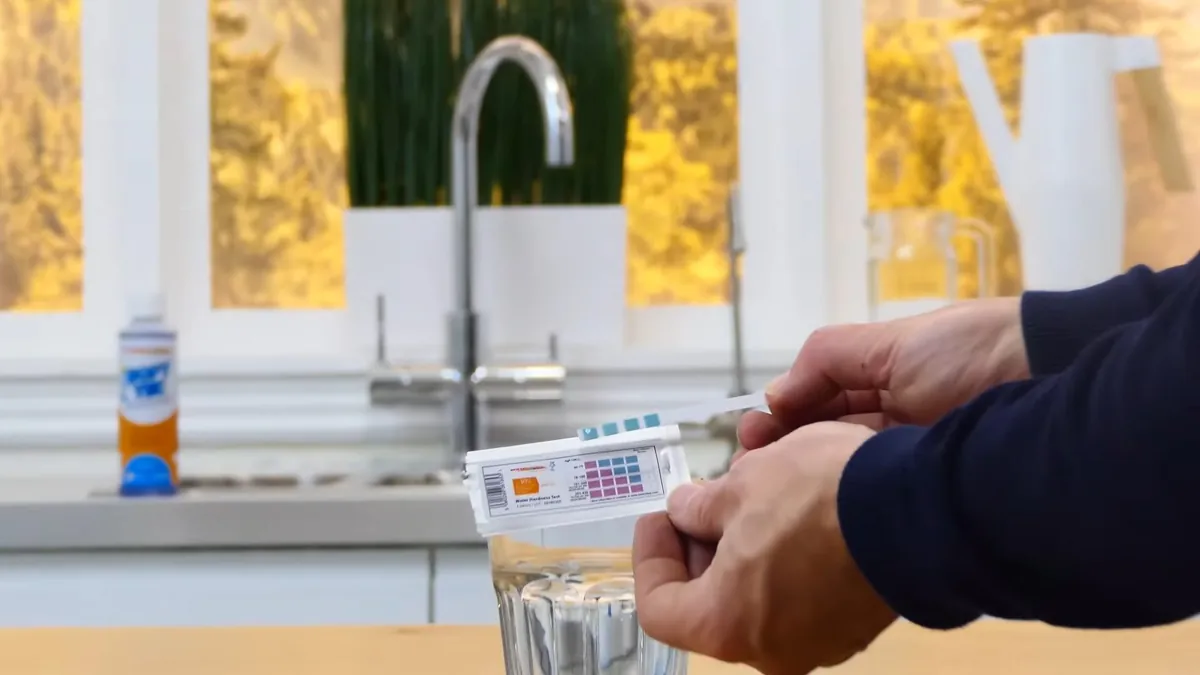
The Water Department's own guide describes Baxter water as moderately hard, at a little under 100 parts per million. It places Belmont near 130 and Queen Lane near 150, both in the range it calls hard (Water Department guide). Those figures come from a 2019 report, so check the current annual report for the plant that serves you. Treat any single number as a starting point, because the plant, the season and the length of the pipe to your tap all play a part.
A softener makes sense when scale is visible and costs you something: a heater that loses capacity, a showerhead that clogs, a kettle that crusts. If you see none of those, there is no case for the equipment. The softener and filtration page explains what a system needs.
Pipe or drain trouble in Philadelphia?
Call dispatch and describe what you see. A plumber serving your area tells you what to shut off while you wait.
Who owns which pipe: the city or the homeowner
The Water Department owns the water main and the sewer main. The homeowner owns the water service pipe from the main to the house, the lateral, the slant, the curb trap and the main house drain (customer responsibilities). The diagram differs in a combined sewer area and a separate sewer area (responsibility diagram).
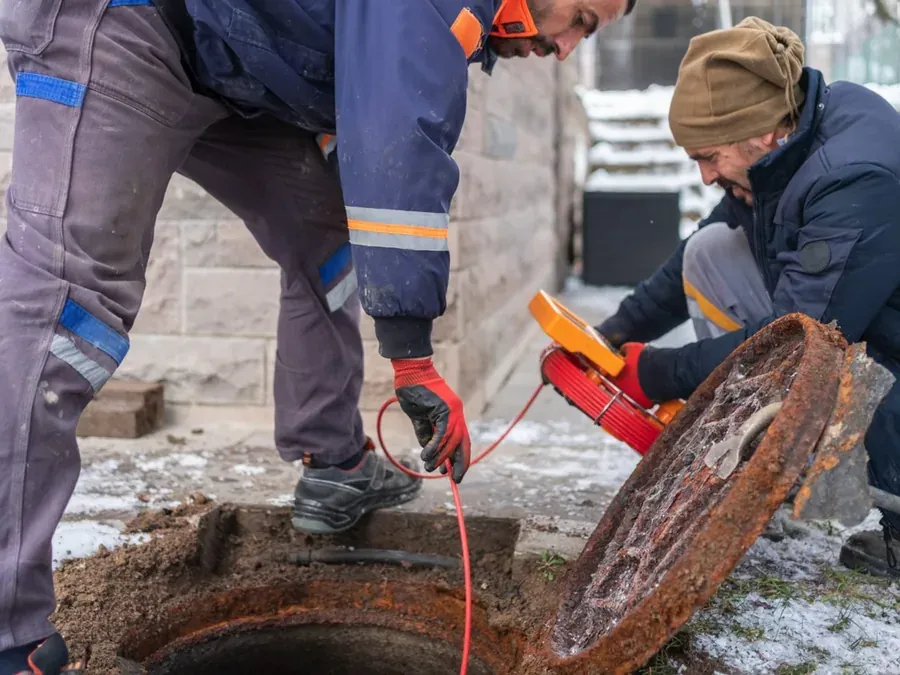
When a toilet backs up or a basement drain gurgles, a camera inspection shows whether the blockage is in your pipe or the main. The sewer line page explains how repair and replacement work, and the drain cleaning and clogs service explains the cable and jetting tools.
- Stop using water at the fixture that is backing up.
- Look for a wet stain at the cleanout or the curb trap.
- Ask for a written camera report so you have a record.
- Keep any notice you receive from the Water Department.
Water damage and sewer backups in older neighborhoods
Philadelphia's combined sewer system was built in the late 1800s and early 1900s to carry both stormwater and household waste (Philly Watersheds). Heavy rain can overwhelm it and push water into basements. The Water Department's basement backup program installs backwater valves for qualifying homeowners, and the department says the program helps people who are experiencing backups now (program form).
If water enters the house from a fixture, stop using water and call. Move belongings off the floor, photograph the water line on the wall and keep any bills for cleaning, because a claim or a program application may ask for them. A plumber can check the lateral and tell you whether a valve is worth adding. The water damage page explains how repair and drying fit together.
Landmarks and hospitals across Philadelphia
The city is large, and dispatch relies on street addresses. These places are confirmed from public sources and can help you describe where you are.
Eastern State Penitentiary
National Historic Landmark at 2027 Fairmount Avenue (Eastern State).
Albert Einstein Medical Center
Hospital at 5501 Old York Road in the Logan area (historical marker).
Temple University Hospital
Hospital at 3401 North Broad Street (hospital listing).
Chestnut Hill Hospital
Hospital at 8835 Germantown Avenue.
Philadelphia spans dozens of postal codes, and Center City shares three of them (19102, 19103 and 19107). ZIP codes served by this dispatch network, citywide list:
- 19019
- 19092
- 19093
- 19099
- 19101
- 19102
- 19103
- 19104
- 19105
- 19106
- 19107
- 19108
- 19109
- 19110
- 19111
- 19112
- 19113
- 19114
- 19115
- 19116
- 19118
- 19119
- 19120
- 19121
- 19122
- 19123
- 19124
- 19125
- 19126
- 19127
- 19128
- 19129
- 19130
- 19131
- 19132
- 19133
- 19134
- 19135
- 19136
- 19137
- 19138
- 19139
- 19140
- 19141
- 19142
- 19143
- 19144
- 19145
- 19146
- 19147
- 19148
- 19149
- 19150
- 19151
- 19152
- 19153
- 19154
- 19155
- 19160
- 19161
- 19162
- 19170
- 19171
- 19172
- 19173
- 19175
- 19176
- 19177
- 19178
- 19179
- 19181
- 19182
- 19183
- 19184
- 19185
- 19187
- 19188
- 19190
- 19191
- 19192
- 19193
- 19194
- 19195
- 19196
- 19197
- 19244
- 19255
Areas next to Philadelphia
Philadelphia borders several of the areas this dispatch line covers. Distances are between town centers.
- Center City is about 4.2 miles away, on its own Center City plumbing help.
- Bala Cynwyd is about 5.0 miles away, with a plumbers serving Bala Cynwyd.
- Wyncote is about 5.8 miles away, covered by plumbing in Wyncote.
Need a plumber in Philadelphia?
One call reaches dispatch for Philadelphia and the neighboring areas.
Further Philadelphia services, with page links
- about drain cleaning and clogs for clogs that return.
- Sewer line repair once a camera has shown the damage.
- Water heater installation for planned swaps.
- water heater repair service when a tank leaks or the water stays cold.
- Leak detection for a high water bill.
- Tankless water heaters as an alternative to a storage tank.
The homepage outlines how dispatch deals with urgent requests.
Philadelphia plumbing questions
Where does my Philadelphia water come from, and does it change what I should do?
It depends on your address. The Water Department treats water at three plants: Baxter on the Delaware, and Queen Lane and Belmont on the Schuylkill. Some neighborhoods get a mix. The plant matters for scale, so a plumber can test the tap and tell you whether a filter or softener makes sense.
How do I tell whether my Philadelphia water is hard enough for a softener?
The Water Department's own guide places Baxter water under 100 parts per million, and Belmont and Queen Lane near 130 and 150. If you see scale on fixtures, a plumber can test your tap, compare it with the current report and tell you if the cost makes sense.
Call a plumber serving Philadelphia
Dispatch confirms your address, and the plumber explains the options before any work starts.
- Licensed and insured plumbers
- Same-day service when available
- 24/7 emergency dispatch