
24/7 Emergency Line Open
Pipe repair and repiping
Emergency Pipe Repair and Whole-House Repiping in Cheltenham
A pipe that splits behind a wall, copper that sprouts a new pinhole every few months, or rusty water from every tap: these are pipe problems, and the right fix depends on whether the failure is one weak spot or the whole system wearing out.
The plumber stops the water, repairs what has failed, and gives you an honest comparison of fixing this pipe again against replacing the run.
- Licensed and insured plumbers
- Same-day service when available
- 24/7 emergency dispatch
A pipe has split: finding the break and choosing the fix
Water that is spraying, pooling or soaking a ceiling needs one thing first, which is to be shut off. Everything else can wait ten minutes.
- Close the main shutoff, usually near the meter or where the line enters the house.
- Open the lowest faucet and one upstairs faucet so trapped water drains instead of leaking out of the break.
- Move belongings out of the wet zone and photograph the damage.
- Call dispatch and say where the water is coming from, what material the visible pipe is, and what you have already shut off.
The plumber then exposes the break, cuts out the damaged piece and joins in new pipe. Ask how large an opening the access needs, and what the rest of that line looks like, because a burst pipe in the middle of old, thin pipe is often the first of several.
Pipe repair or whole-house repiping: how the choice is made
Repair is the right answer for one isolated failure in pipe that is otherwise sound. Repiping is the right answer when the failures keep coming, when the water is discolored at every tap, or when pressure has fallen throughout the house because the pipe interior has narrowed.
If a split pipe has already soaked drywall or flooring, the soaked wall and floor cleanup page explains the drying that follows. A fair rule: after a second leak on the same system, ask for the repiping option in writing next to the repair option. If you plan to sell or renovate, repiping is easier to do before walls are closed up or finished. Be wary of any advice that treats the choice as automatic in either direction. A plumber who explains why repair will hold, or why it will not, is giving you the information you need. A pipefitter works on process and industrial piping, while a residential plumber handles the supply and drain systems in a house.
| Situation | Usual answer | Why |
|---|---|---|
| One leak in an otherwise clean pipe | Repair that section | The rest of the pipe is not the problem |
| Several pinholes within a year or two | Replace that run or the whole system | The pipe wall is thinning everywhere |
| Rust-colored water and low pressure | Repipe the affected lines | The inside of the pipe is closing off |
| Open walls during a renovation | Replace while it is accessible | Access now avoids a second opening later |
Second leak on the same line?
Ask dispatch for a plumber who will price the repair and the repipe side by side before you decide.
Copper pipe: pinholes and what they mean
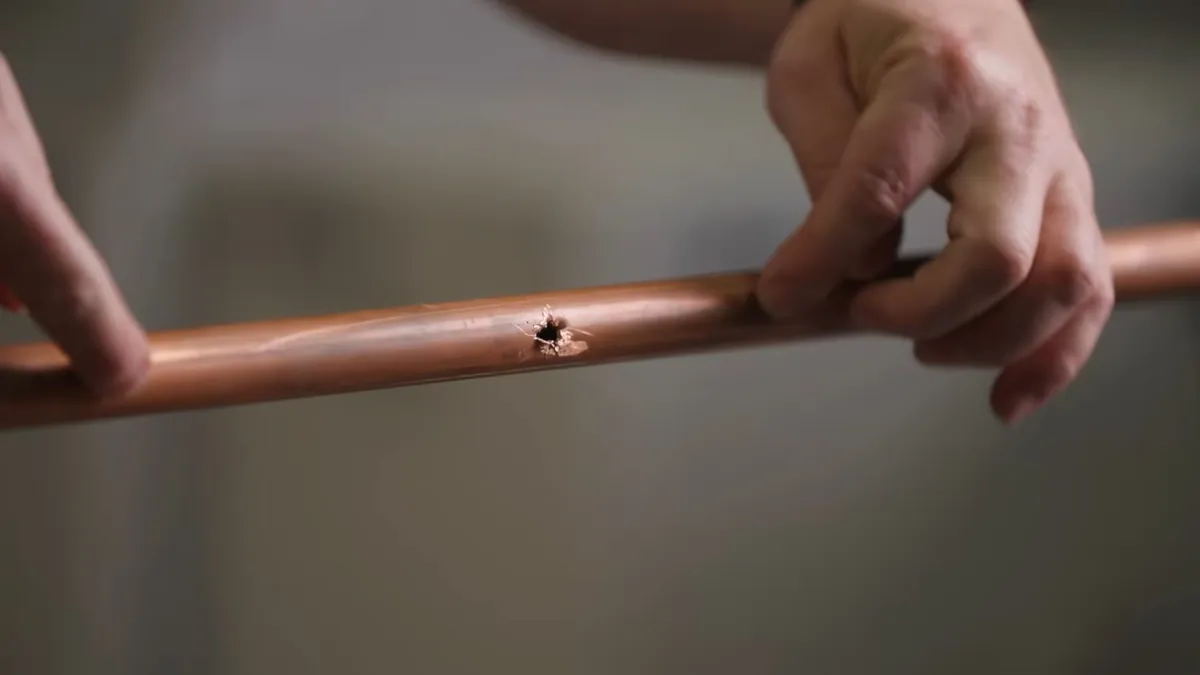
Copper lasts for decades, which is why a pinhole in a house with the original copper deserves attention. Pinholes appear when the pipe wall corrodes from the inside, driven by water chemistry, flow velocity and age, and the first one is rarely the last.
American Community Survey figures summarized for the Cheltenham community place about 64 percent of homes in the 1940 to 1969 band and a quarter earlier still, so original supply piping is common here. Aqua Pennsylvania supplies water in the township, and your utility's annual water-quality report lists what is in it. Ask the plumber to look at a cut section of pipe, since the interior shows what the exterior hides.
Sources: Location, Inc. housing-age data and Pennsylvania Public Utility Commission filing on Aqua service, checked November 2026.
Galvanized steel and other older supply pipe
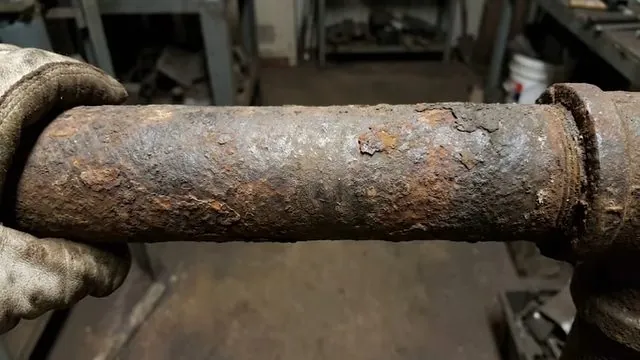
Galvanized steel supply pipe rusts from the inside until the opening narrows to a fraction of its original size. The first signs are brown water after the house has been idle, low pressure at upper floors, and fittings that crumble when touched. Older homes may still have galvanized lines in sections that were never replaced.
Once that pipe is showing symptoms, patching it just moves the leak down the line. Replacing the run is the sensible fix, and it is worth doing before a finished wall or ceiling has to be opened in an emergency. Other materials come up as well: polybutylene, a gray plastic used in some mid-1980s to mid-1990s homes, is worth replacing on sight, while CPVC and PVC are common modern choices with their own joint and temperature limits.
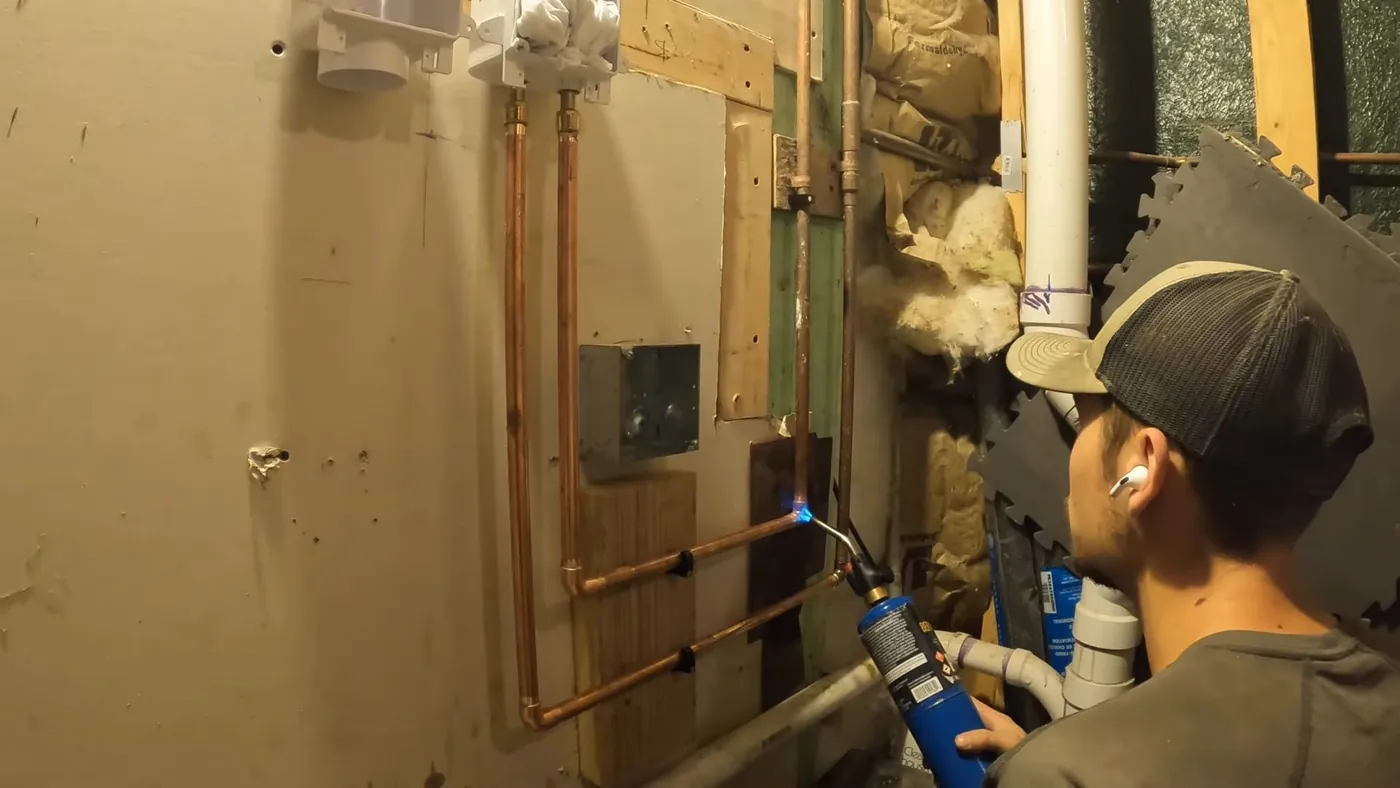
New pipe: PEX and copper replacement
Most repipes now use PEX, a flexible plastic tubing that runs through walls with fewer joints and tolerates cold better than rigid pipe. Copper remains a fine choice where a house is already piped in it or where the owner prefers it. The choice changes how much wall opening the job needs, not the end result at the faucet.
Under the township plumbing code, replacing water supply piping counts as plumbing and drainage work, so it belongs with a registered plumber and the paperwork that comes with one. Ask who is pulling the permit, how many fixtures will be reconnected, and what wall and ceiling patching is part of the quote.
Code basis: Chapter 209, township Plumbing Standards, reviewed in November 2026.
Ready to compare repiping options?
Call dispatch, describe the pipe you have, and ask for an assessment that shows which sections are worth saving.
Pipes that froze: thaw, then check for splits
Frozen pipes appear as a faucet that runs a trickle or nothing at all in cold weather. Ice has formed in the line, usually where it crosses an unheated crawlspace, a garage wall or an exterior corner.
Open the faucet so water has somewhere to go as the ice melts, and warm the pipe gently with a hair dryer or warm towels, working toward the faucet. Never use an open flame or a torch. If any section is bulging or water appears as it thaws, close the main and call, because the pipe has split and the leak begins when the ice goes.
Water lines buried outside have to sit below the frost line. Commonly cited depths for this region run from 30 to 36 inches, and the township building office confirms which one applies to a specific job.
Safety: never use a torch or open flame on a frozen pipe, and keep electrical tools and cords away from standing water. If water is already coming through a ceiling near light fixtures, switch off that circuit at the panel.
Pipes under the floor or in the ground
A leak in a supply line buried in the yard, or under a concrete floor, shows as a wet patch that never dries, a sunken strip of ground or a meter that moves with the house off. Reaching it means excavation or a different route for the new pipe. If the floor is concrete, the page on slab leak repair options covers how those lines are located and replaced.
Before any digging, close the main shutoff and watch the meter. If the dial still turns with every fixture off, the loss is in the line between the meter and the house or inside the structure. A plumber can then pressure test each section to narrow the dig. Mark the area, keep children and pets off soft ground, and call the utility locating service before anyone excavates so buried lines are not struck.
Pipe repair and repiping questions answered
Why can a leak under a slab or in the ground be harder to fix than one in a wall?
Because the pipe cannot be seen or reached without digging or breaking concrete. A buried leak must first be located with pressure and listening tests, then reached by excavation or avoided by running a new line through the walls or attic. Each approach costs time and disturbs finishes, so the choice depends on the pipe route.
Is it better to repair a cracked pipe or replace it?
Look at the housing: a large share of Cheltenham homes were built between the 1940s and the 1960s, so original pipe is common. If the break is in sound pipe, repair it. If the cracked pipe is thin, corroded or has leaked before, replace that run. Ask the plumber to show you the cut section, and decide from what the inside looks like.
What should I do after a pipe bursts?
Picture a pipe that splits in a basement ceiling at night. The first move is closing the main shutoff, the second is opening a low faucet to drain the lines, and the third is calling dispatch. After the water stops, photograph the damage and move belongings. The repair can wait until a plumber arrives, but the water cannot.
Can cast iron, PVC or CPVC pipe be repaired, or does it have to be replaced?
Do now: shut off the water to the line and call a plumber. Can wait: choosing the final material. A cracked cast iron drain section is usually cut out and replaced, and PVC or CPVC can be spliced with a new section when the rest of the pipe is sound. The right choice depends on pipe condition, not just the break.
Stop patching pipe that keeps failing
Call dispatch with the pipe material, the number of leaks so far and where they appeared, and ask for a repair-versus-repipe comparison in writing.
- Licensed and insured plumbers
- Same-day service when available
- 24/7 emergency dispatch